กล่าวคือภายหลังจากควบรวมแล้ว บริษัทหนึ่งบริษัทใดยังคงมีสภาพนิติบุคคล และบริษัทอื่นที่ควบรวมกันหมดสภาพจากการเป็นนิติบุคคล (บริษัท A + บริษัท B = บริษัท A หรือ B) การเพิ่มเติมคำนิยามนี้ทำให้บริษัทจำกัดที่มีการควบรวมในลักษณะดังกล่าว ได้รับผลทางกฎหมายและสิทธิประโยชน์เช่นเดียวกันกับการควบรวมที่มีอยู่เดิม
บอสเริ่มเป็นที่รู้จักจากผลงานหลาย ๆ ที่ผ่านมาหลายเรื่อง อาทิ Side by Side พี่น้องลูกขนไก่, I HATE YOU, I LOVE YOU, แปลรักฉันด้วยใจเธอ และมาถึงวิมานหนาม ซึ่งเป็นผลงานล่าสุดของบอส เมื่อลองย้อนกลับไปดูงานที่ผ่าน ๆ มาของบอส[1] เราจะพบว่ามีสิ่งหนึ่งที่เหมือนลายเซ็นในงานของบอสคือ การนำเสนอประเด็นเรื่องความหลากหลายและความแตกต่างไว้ในผลงาน
ยกตัวอย่างเช่น ในเรื่อง Side by Side พี่น้องลูกขนไก่เป็นที่เป็นเรื่องเกี่ยวกับครอบครัวนักกีฬาที่ประกอบด้วยคุณแม่เลี้ยงเดี่ยวซึ่งเป็นพี่น้องสายเลือดเดียวกัน (แม่ตั้มและแม่แตง) โดยมีลูกชาย 2 คนคือ พี่ยิม ซึ่งมีภาวะออทิสติก และน้องโด่ง โดยทั้งพี่ยิมและน้องโด่งต่างมีความฝันที่จะเป็นนักแบดมินตันมืออาชีพ
[3] ดู จุฑามาศ สาคร, “การสร้างตัวละครตัวละครที่มีลักษณะเฉพาะและการเล่าของละครโทรทัศน์ชุดโปรเจกต์เอส เดอะ ซีรีส์ตอน Side by Side พี่น้องลูกขนไก่ และ SOS Skate SOS Skate ซึม ซ่าส์,” (วิทยานิพนธ์ปริญญานิเทศศาสตรมหาบัณฑิต สาขาวิชานิเทศศาสตร์ จุฬาลงกรณ์มหาวิทยาลัย, 2561), https://digital.car.chula.ac.th/cgi/viewcontent.cgi?article=3958&context=chulaetd.
First Published in Bangkok Post on August 28, 2024. This op-ed was written by Khemmapat Trisadikoon and Chattrika Napatanapong.
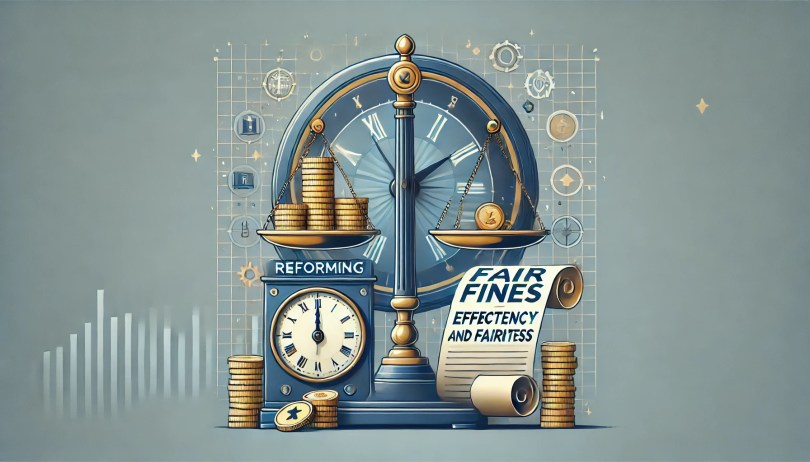
If you think our legal system is fair by imposing the same penalty on everyone for the same offence, think again.
Take the system of fines. Imposing the same fines on both the rich and the poor for the same violation hurts the poor while leaving the rich virtually unaffected.
To ensure fairness, this outdated system needs urgent reform.
Why focus on the fine system? Because the law mandates that courts use fines for less serious offences. Therefore, fines are the main penalty used by lower courts across the country, affecting the majority of people.
Between 2018 and 2022, the courts used fines in their verdicts far more often than imprisonment and detention, excluding suspended sentences, according to the Office of the Judiciary.
Thailand’s rigid fine system uses fixed fines for the same offence for everyone. For example, a particular crime may specify a fixed fine between 500 to 15,000 baht. Imagine the difference a street vendor and a millionaire face when ordered to pay a 10,000-baht fine.
This fixed fine system, which specifies the exact amounts for a violation, creates two problems: unfair penalties and outdated fines that cannot keep up with economic changes.
Firstly, unfair penalties. While imposing the same fine on everyone may seem fair, it definitely is not. Disregarding the country’s gross economic disparity, this system does not consider the economic status, income, or financial burden that affects low-income offenders more than the well-off.
Since those with money are not affected by the fines, they may continue to break the law because they are not afraid of the punishment.
Meanwhile, low-income offenders may have to choose imprisonment over paying the fines because they do not have the means to, reflecting disparity and social inequality in Thai society.
The Ministry of Justice and the Office of the Judiciary introduced measures like EM bracelets with bail or instalment payments for fines to address this concern. True, they might help reduce the number of people in jail, but they do not address the problem of disparity and unfair penalties.
Secondly, outdated fines that are out of touch with the present time. Since the fines were set long ago, they have become too low due to inflation over time.
Believe it or not, a study by the Thailand Development Research Institute shows that there are 420 laws that are still enforcing fines set as far back as 1859. One of them is the 1902 Clean Canal Act, which set the fine for littering in canals at just 20 baht.
However, setting the new rate of fines requires new legislation, which can become outdated by the time it is enacted.
To ensure fair and effective fines, Thailand can learn from the initiatives of other countries.
One solution is to eliminate fixed fines and replace them with fines per day that vary with the severity of the offence, the offender’s economic status, and their daily income to calculate appropriate fines.
The formula of the day-fine system is: fine = number of offence units (fine days) x the offender’s net daily income.
For example, running a red light is punishable by a fine of up to 4,000 baht without a jail term. Since it is not a severe offence, the fine may be calculated as five fine days x 1,000 baht net daily income, resulting in a 5,000-baht fine.
Different countries, however, have different systems for calculating variable fines according to their specific contexts.
For example, Germany uses two main factors to calculate daily fines: the number of fine days and the offender’s personal and financial circumstances, including occupation, income, and living conditions. This data, gathered through police investigations, is used to determine the offender’s net daily income.
In Finland, the police and prosecutors initially set fines for offenders. If these fines are not paid, the court decides whether to impose a new fine or a jail term. The penalty is based on the offender’s net daily income and information from their latest tax return, which can be accessed by the court and state authorities.
Meanwhile, several states in the United States have begun using the variable fine system before and after court procedures. For low-income offenders, the unemployed, and other vulnerable groups, the court may consider using the income of their spouses or carers to calculate their net daily income.
Several changes will be necessary for Thailand to adopt variable fines for a fair and effective system.
Most importantly, new legislation is needed to create a variable fine system, requiring other laws to change their penalties accordingly. This new law should also set rules and criteria on how it works.
First, it must determine which offences should be covered by the variable fine system. Our stance is that it should apply to all offences with fine penalties. In the initial stage, it should start with minor offences, traffic violations, and environmental and economic crimes.
Second, it should establish the rules for calculating the number of offence units or fine days. Our stance is that the fine days should be based on the severity of the offence comparable to the jail sentence. For example, if the jail term is more than one year, the number of fine days may be set at 360 days for each year of the verdict. If the verdict for a lesser offence is only one month, then the fine penalty may be calculated as 30 fine days.
Third, the law should establish criteria for using the offender’s economic status in calculating the number of fine days. It should also specify the factors that can reduce fines, such as income level, tax burden, and living expenses. These factors reflect the offender’s real net income and help determine proportional fines.
Apart from drafting the new law to institutionalise the fine-per-day system, the government needs to create implementation guidelines for relevant agencies, such as the police, prosecutors, judges, and officials in political administration, to collaborate on the procedures. Officials from the Revenue Department and social security agencies may also take part in determining the net income of the offenders. These proposals are part of what the government, political entities, and state agencies need to prepare to implement a fair and efficient variable fine system.
By updating the fine system to reflect economic and social realities, Thailand can move one step closer to a more just and equitable legal system. It is time for change.
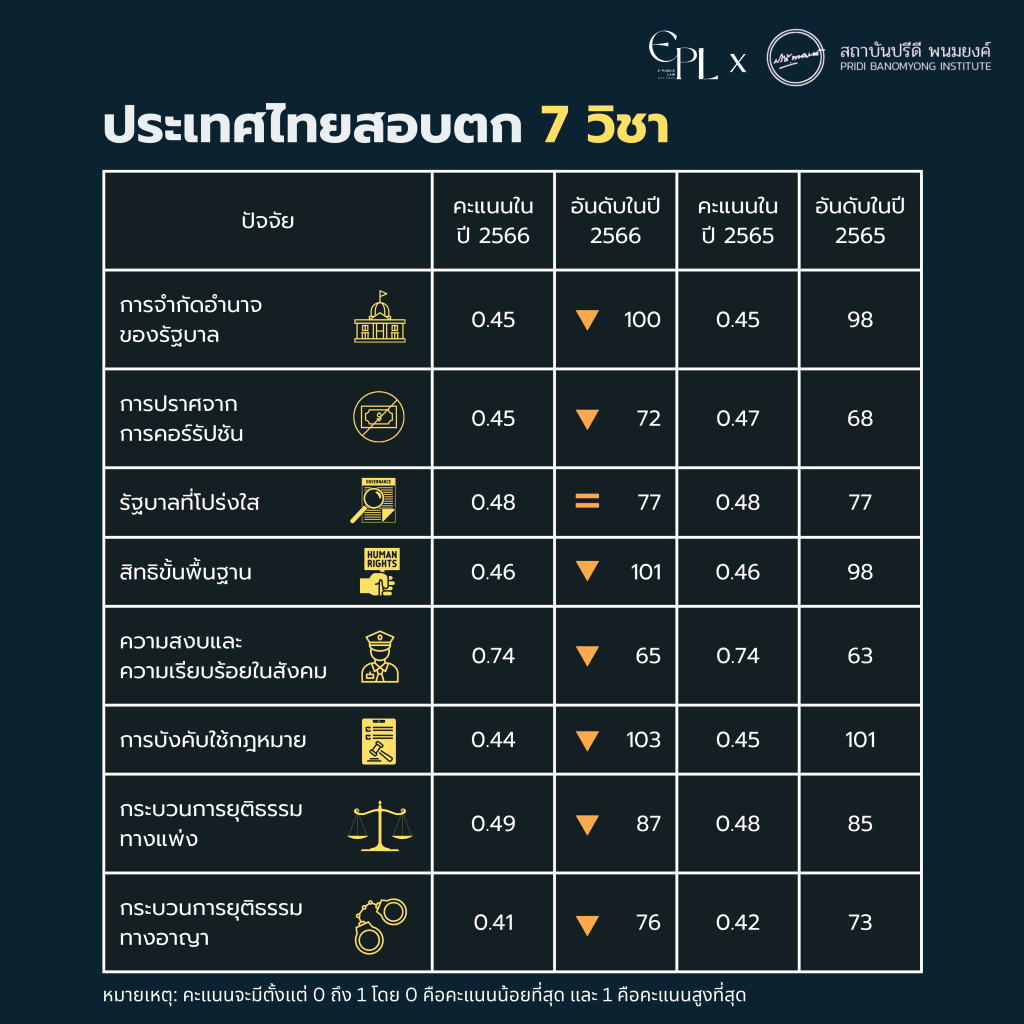
หนึ่งในการจัดลำดับสากลที่มีความน่าสนใจเกี่ยวกับสิทธิมนุษยชนและกระบวนการยุติธรรมคือ การประเมินตามดัชนีหลักนิติธรรม (Rule of law index) ซึ่งจัดทำขึ้นเพื่อประเมินผลการดำเนินงานและสถานการณ์เกี่ยวกับการปฏิบัติตามหลักนิติธรรมของประเทศจำนวน 142 ประเทศ
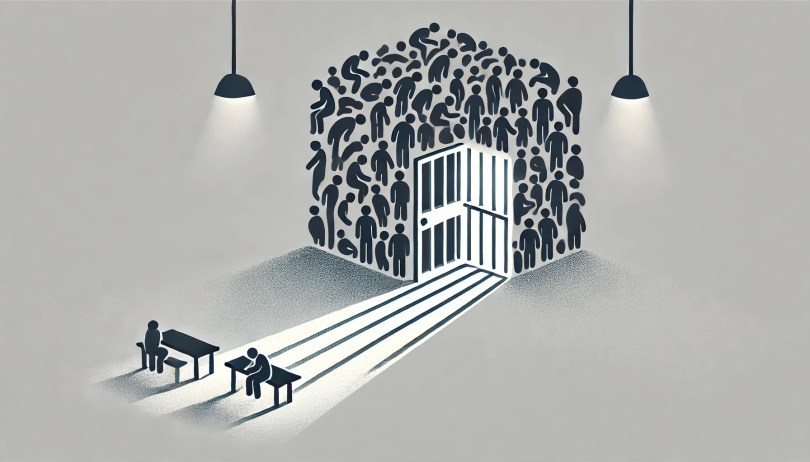
Extreme overcrowding in Thai prisons forces inmates to endure deplorable conditions, stripping away their dignity and humanity. It’s a humanitarian crisis that demands immediate action.
Due to terribly cramped spaces, inmates barely have room to sleep. They also suffer poor sanity from insufficient toilets and bathing facilities, in addition to poor-quality food and substandard healthcare.
It’s crucial to reduce the unnecessary number of inmates in order to alleviate overcrowding strains and enhance inmates’ quality of life.
Statistics from the past 10 years of the Department of Corrections show that there were an average of 310,000 new inmates per year nationwide, with figures peaking at 350,000 to 360,000 between 2018 and 2020. The inmate population exceeds capacity by at least 40,000 to 50,000 people.
According to the International Federation for Human Rights, Thai prisons have a population more than double the intended capacity, based on a standard of providing 2.25m² of surface area per prisoner. Thailand also has the 6th highest prison population in the world and the highest prison population in Asean.
The prison overcrowding crisis has a serious health impact on inmates, leading to numerous physical and mental health problems such as tuberculosis, asthma, scabies, stress, insomnia, weight loss, and depression, sometimes resulting in suicidal tendencies.
Compounding these concerns is the inadequate healthcare in prisons. A 2022 report from the Ministry of Public Health reveals that dental and mental health services in prison hospitals are subpar, further exacerbating the inmates’ plights.
When Covid-19 hit Thailand, the prisons were the hardest impacted by the pandemic due to overcrowding. According to the Department of Corrections, 40% of inmates contracted Covid-19, resulting in 139 deaths in 2022.
Multiple factors fuel prison overcrowding. They include the excessive use of imprisonment, unnecessary sentencing, and the imposition of extreme penalties with lengthy prison terms. The inadequate implementation of alternatives to imprisonment further exacerbates the situation, culminating in an explosive inmate population.
While there have been attempts to utilise electronic monitoring (EM) as an alternative to incarceration with the aim of alleviating overcrowding and facilitating inmates’ reintegration into society, its effectiveness in rehabilitating offenders remains questionable. The social stigma attached to wearing the device often hinders successful reintegration and may contribute to repeat offences.
According to a 2023 TDRI study, the justice system often overlooks and fails to support alternatives to imprisonment, especially public service work as a detention substitute. In fact, community service not only benefits inmates but also contributes to the economy.
Currently, Thai law supports social service work as an alternative to imprisonment. People who are unable to pay fines, those under court-ordered supervision, or those whose sentences have been suspended or reduced — typical verdicts for minor or non-violent offences — may choose to perform community service instead.
Social service work lets offenders stay at home and lead regular lives while doing their community duties as ordered by the court. This option helps reduce the financial burden on their families, who would otherwise struggle to support them in prison. Plus, the convicts can keep working and return to normal life after serving their sentences.
However, the existing system of social service work faces at least two limitations. Firstly, there are no clear guidelines regarding the duration of service, resulting in inconsistencies. Secondly, the available assignments are limited and mainly involve manual labour tasks like cleaning, municipal sanitation work, government building maintenance, or blood donations. This approach often overlooks the diverse skills and abilities of individuals who could otherwise contribute meaningfully to society and the economy.
Compared with international practices, their approach to public service work is clear about work hours and the diversity of tasks that meet the economic and social needs of the country.
The United Kingdom, for example, has clear guidelines both for the duration and variety of social service work based on the severity of the offences committed. The UK courts have the authority to set working hours and the types of social service work according to the offence. For minor offences, the duration is between 40-80 hours; moderate offences, 80-150 hours; and for severe offences, 150-300 hours of service.
In Los Angeles, USA, the court has clear guidelines on the type of community service work. Offenders are assigned to work in various public and nonprofit organisations such as city parks, animal shelters, and cleaning centres. Depending on individuals’ skills, these tasks can support government staff or directly benefit the public. For example, helping with paperwork, public relations, or accounting can generate economic and social benefits.
Setting suitable work hours not only reflects the severity of the given sentence but also helps make up for the lost hours in public service work. Statistics from the UK show that such community service helps offset the workforce shortage by 4.8 million hours, while in Los Angeles, it can compensate for up to 8.5 million hours, generating an economic value of around $100 million (3.6 billion baht).
To adopt similar approaches successfully, the government should swiftly maximise the existing public service initiatives to their fullest potential. This entails two critical steps: first, clearly defining the duration of community work to ensure offenders understand how long they are required to serve, and second, identifying the types of work that contribute economically to society and foster individual growth beyond mere labour-intensive tasks and basic skills.
Furthermore, the government should collaborate with other state agencies, particularly the Ministry of Justice and the Ministry of Labour, to develop mechanisms for job placement, supervision, and oversight of offenders involved in community service work. These initiatives not only alleviate prison overcrowding and enhance the welfare of inmates but also help them transition back into society by enabling them to contribute meaningfully to society.
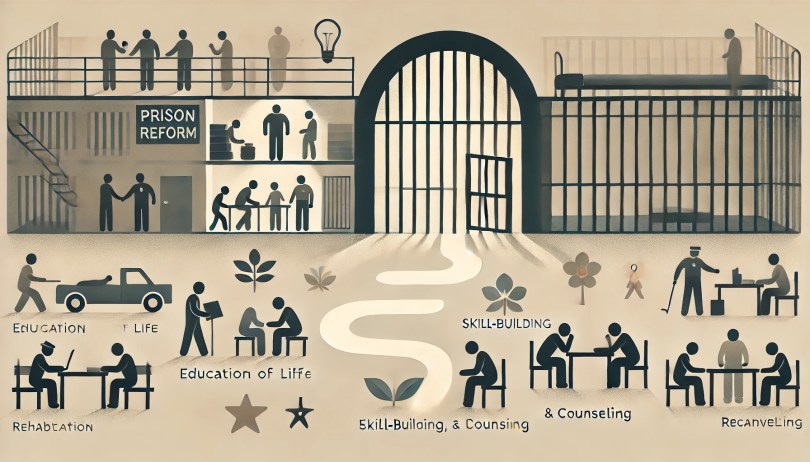
Embracing alternatives like community service not only addresses the dire conditions of overcrowded prisons but also fosters inmates’ self-esteem and belief in their potential — essential for their successful return to society. It also underscores the importance of a justice system that balances accountability with compassion, offering those who have erred a pathway to rehabilitation and a fresh start.
แม้ว่าที่ผ่านมามีความพยายามใช้กำไล EM มาเป็นทางเลือกเพื่อควบคุมตัวผู้ทำความผิดแทนการกักขัง โดยคาดหวังว่าจะช่วยลดความหนาแน่นในเรือนจำได้ รวมถึงเป็นการให้โอกาสผู้ทำความผิดกลับเข้ามาใช้ชีวิตในสังคม ทว่า การใส่กำไล EM อาจไม่ได้ช่วยผู้ทำความผิดในการฟื้นฟูพฤตินิสัยและการปรับตัวเข้ากับสังคมตามปกติ เนื่องจากยังถูกสังคมตีตราจากการใส่กำไล EM ทำให้อาจกลับไปกระทำความผิดซ้ำอีกครั้ง
















 Khemmapat Trisadikoon